

CHALLENGE
A real operational problem, not a demo.
Software teams lose hours to a single bug report: a screenshot in one tool, a spreadsheet row in another, and a chat thread that never quite captures the steps. QA switches context constantly. Developers wait on incomplete reports and unclear reproduction. Enterprise trackers are built for process-heavy organizations, and startups running agile cycles feel that weight immediately. Without a lightweight system, tracking turns chaotic, handoffs break down, and release quality slips.
SOLUTION
A system built around the work.
Lucidmark is a multi-tenant bug tracking SaaS built for startups and QA teams that need speed without giving up structure. One line of script embeds a reporting widget on the product site. Anyone can capture a bug with screenshots, video, notes, console logs, and browser metadata in a single click — no extra tools and no back-and-forth. Every report lands on a visual Kanban board, where issues are prioritized, assigned, and tracked in real time. Stripe handles subscription billing across tiers, and role-based dashboards keep team members, admins, and clients in the right view.
FEATURES
What the team actually uses.
Instant reporting widget
Capture issues directly from the website with images, videos, and notes.
Visual Kanban boards
Track, prioritize, and resolve bugs in real time from one board.
Multi-role team management
Assign roles, delegate tasks, and run workflows for members, admins, and clients.
Workflow integrations
Connect Jira, Trello, Slack, and ClickUp so reporting fits the tools already in use.
Access control
Role-based permissions keep each tenant’s bugs, notes, and billing in the right hands.
Analytics and reports
See QA efficiency clearly and tighten release cycles around what the data shows.
WHAT MAKES THIS DIFFERENT
The automation stays accountable.
A super admin panel runs the platform: roles, permissions, and billing across tenants. Integrations with Jira, Trello, Slack, and ClickUp let Lucidmark sit inside the workflow a team already has. Access stays explicit, and analytics show where QA time goes so release cycles tighten instead of filling up with missed issues.
HOW IT WORKS
A clear path from signal to action.
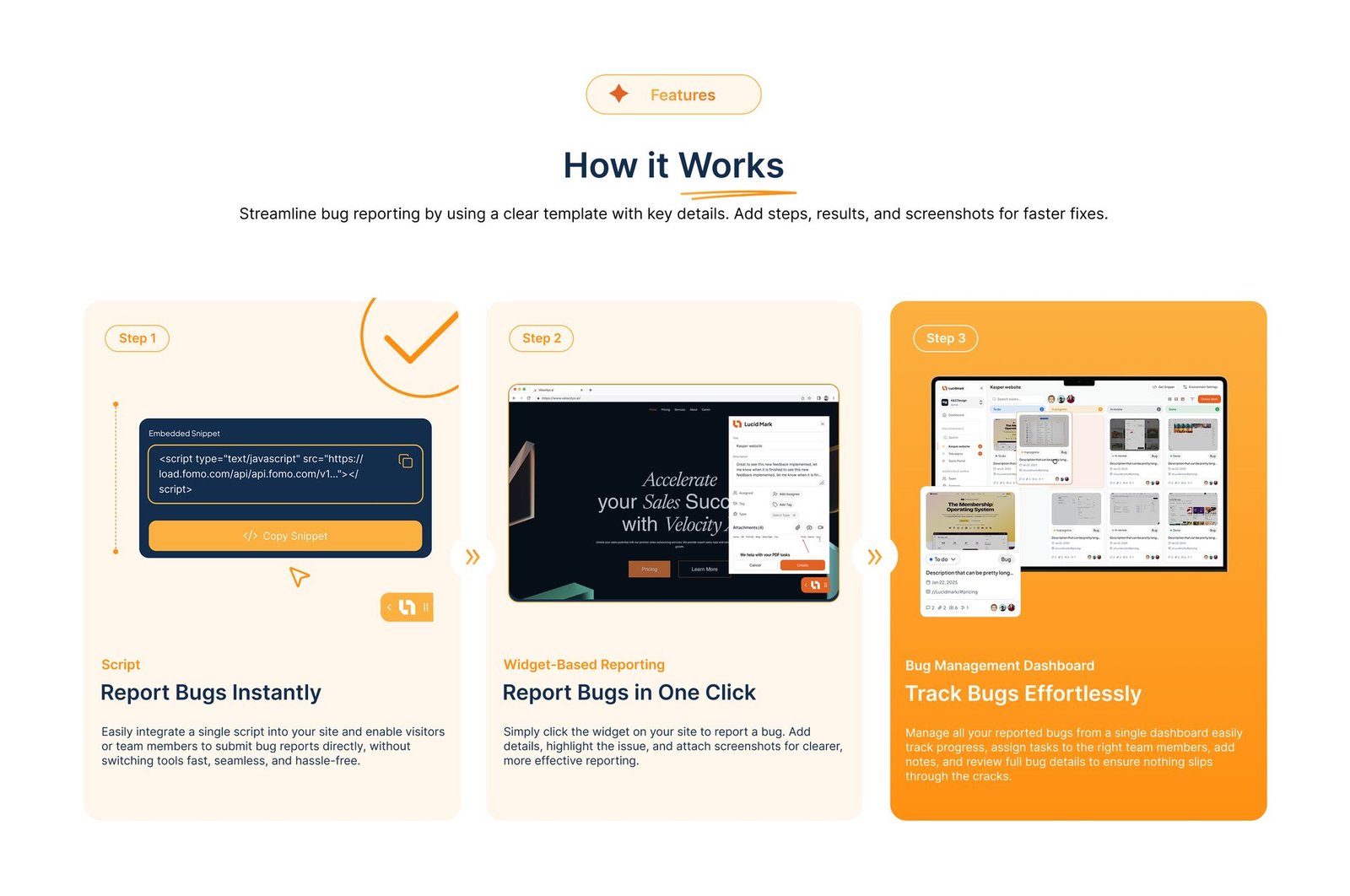
01
Embed the script
One script tag drops the widget onto the site. Visitors and teammates report bugs without leaving the product.
02
Capture in one click
The widget records screenshots, video, notes, console logs, and browser metadata with the report.
03
Triage on the board
Reports open on a Kanban board, ready to prioritize, assign, and move in real time.
04
Track through release
Dashboards, permissions, and notes keep full bug detail visible so nothing slips through.
RESULTS
From fragmented work to a plan people can use.
Reporting got 50% faster once the manual steps were gone. Growing product teams saved more than 20 hours a week. Clearer visibility meant fewer missed issues, more reliable releases, and shorter go-to-market cycles for teams that needed to ship without adopting enterprise process.